


Expert Commercial Tree Services for HOAs & Property Managers in Jacksonville, FL
Liability Protection Starts with Proactive Tree Management
Managing a homeowners association or commercial property in Jacksonville brings unique challenges. Trees add aesthetic value and curb appeal, but they also represent significant liability exposure when not properly maintained. Overgrown branches near structures, diseased trees threatening walkways, and root systems compromising pavement all create scenarios that can result in costly damage claims.
Insurance carriers scrutinize tree maintenance protocols during policy renewals. Properties with documented tree management plans demonstrate due diligence, which can influence premium rates and coverage terms. Gated communities and high-income neighborhoods in particular require tree work that protects both residents and property values without disrupting the refined appearance that defines these areas.
Jacksonville’s humid subtropical climate accelerates tree growth while also creating conditions favorable to fungal diseases and storm damage. Live oaks, laurel oaks, and pine trees dominate the landscape, each with specific maintenance requirements. Planned tree projects conducted during dry seasons minimize turf damage and allow for precision work that emergency situations simply cannot accommodate.
Precision Removal Without Compromising Landscaping
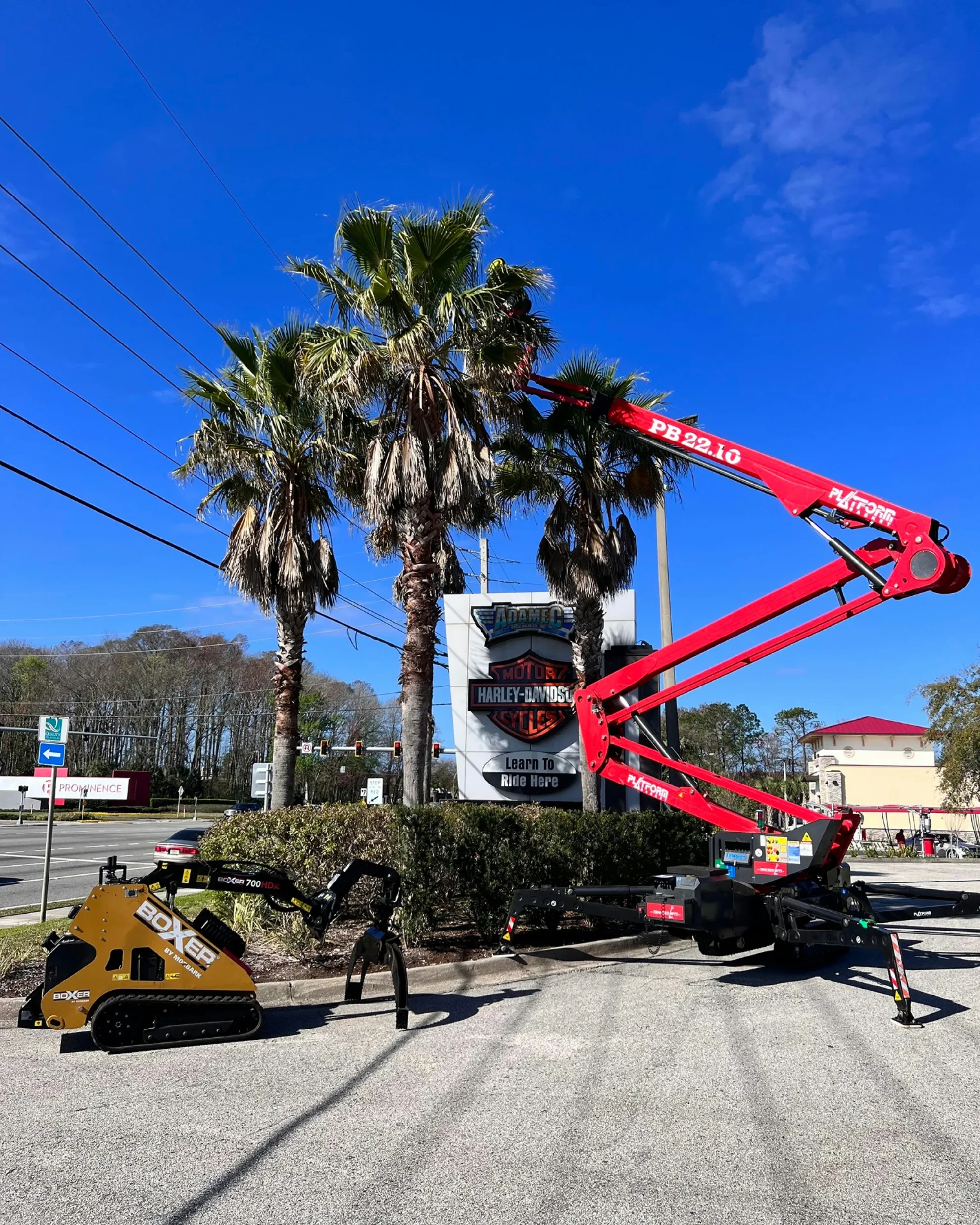
Properties across Duval County—from the Intracoastal communities to Riverside’s historic districts—require tree removal techniques that preserve the integrity of surrounding landscapes. Standard removal methods prioritize efficiency over protection, creating unnecessary damage to irrigation systems, hardscaping, and neighboring vegetation. Zero-damage tree removal employs precision rigging, crane-assisted dismantling, and strategic sectioning that safeguards your property’s valuable landscape investments.
Commercial properties and HOA communities in Duval County often feature integrated landscape designs where trees intersect with lighting systems, water features, and architectural elements. Removing a hazardous tree in these environments demands comprehensive planning before equipment arrives. Access routes, staging areas, and drop zones receive detailed assessment to ensure no damage occurs to surrounding infrastructure.
Licensed arborists evaluate each removal project through a risk management framework. What lies beneath the tree’s canopy? Which underground utilities require protection? How can root extraction proceed without destabilizing adjacent trees? These considerations shape the removal strategy, eliminating hazards without creating new liabilities. Complete documentation provides HOA boards and property managers with records demonstrating responsible property stewardship and due diligence.
The difference between standard tree removal and zero-damage methodology becomes evident when work concludes. Your landscape remains intact, your hardscaping undisturbed, and your property value protected.
Maintenance Programs That Preserve Aesthetic Standards
Commercial properties and HOA communities maintain brand identity through consistent visual presentation. Tree care for these environments extends beyond basic safety to include aesthetic pruning, canopy balancing, and growth management that aligns with architectural guidelines. White-glove service means work crews arrive prepared, execute efficiently, and leave the site in better condition than they found it.
Scheduled maintenance programs allow property managers to budget accurately while preventing the emergency situations that drain reserves. Annual tree health assessments identify developing issues before they escalate into hazards. Crown thinning improves wind resistance ahead of hurricane season, reducing the likelihood of catastrophic failure during tropical storms. Selective pruning maintains clearance from buildings, signage, and lighting fixtures without compromising the tree’s natural form.
Jacksonville’s diverse microclimates create varying growth rates even within a single property. Trees in irrigated areas near retention ponds grow more vigorously than those in native sandy soils. A maintenance program accounts for these differences, applying the appropriate level of attention to each zone. This customized approach prevents both under-maintenance that leads to hazards and over-pruning that stresses trees and diminishes appearance.
Tree Pros Of Florida specializes in commercial tree care that aligns with the operational requirements of property managers and HOA boards. Our licensed and fully insured team understands the documentation needs, scheduling constraints, and quality expectations that define successful commercial relationships. We design tree work to protect structures, landscaping, and liability exposure while maintaining the refined appearance that high-value properties demand.
Strategic Planning for Complex Tree Projects
Complex tree projects on commercial sites require coordination that considers multiple stakeholders. Residents, tenants, vendors, and visitors all interact with the property during normal operations. Tree work must proceed without creating safety hazards, blocking access routes, or generating complaints that burden management staff.
Pre-project communication establishes expectations and timelines. Property managers receive detailed work plans that specify equipment needs, noise levels, and duration estimates. When crane access requires temporary parking restrictions or sidewalk closures, advance notice allows for proper signage and resident notification. This level of planning distinguishes professional operations from contractors who arrive unannounced and create disruption.
Jacksonville properties frequently feature mature live oaks with sprawling canopies that extend over multiple units or parking areas. Pruning these specimens requires precision cuts that maintain structural integrity while achieving clearance objectives. Improper techniques create decay pockets that compromise the tree’s long-term viability. Licensed arborists understand growth patterns and wound response, making pruning decisions that support tree health rather than simply removing wood.
Root management presents particular challenges for commercial sites where underground infrastructure includes irrigation systems, drainage lines, and utility conduits. Surface roots create trip hazards on walkways and damage asphalt in parking areas. Strategic root pruning addresses these issues without destabilizing the tree. In situations where root conflicts cannot be resolved, careful removal and replacement planning ensures continuity of the landscape design.
Documentation and Compliance for Property Managers
Insurance carriers increasingly require documented tree maintenance as a condition of coverage for commercial properties and HOA communities. Properties that cannot demonstrate regular inspections and timely hazard remediation face higher premiums or coverage exclusions. This shift reflects the substantial claims history associated with tree failures, particularly in hurricane-prone regions like Northeast Florida.
Tree risk assessments provide the documentation framework that satisfies insurance requirements. Certified arborists evaluate each significant tree using standardized methodologies that identify structural defects, disease conditions, and environmental stresses. Assessment reports assign risk ratings based on the likelihood of failure and the potential consequences. This information guides maintenance priorities and creates a defensible record of due diligence.
Following major weather events, insurance adjusters scrutinize pre-storm maintenance records to determine liability. Properties with current tree assessments and documented remediation of identified hazards demonstrate reasonable care. Those lacking such records may face disputed claims or allegations of negligence. The relatively modest cost of planned tree maintenance pales in comparison to the financial exposure created by deferred care.
Jacksonville experiences tropical storm impacts most years, with hurricane-force winds arriving less frequently but with devastating effect. Properties in coastal areas like Atlantic Beach and Ponte Vedra Beach face higher wind exposures that accelerate tree stress. Scheduled pruning to reduce wind resistance and remove deadwood provides measurable risk reduction that insurance underwriters recognize and value.
Beyond insurance compliance, documented tree care supports property values during sales or refinancing. Due diligence reviews increasingly include landscape condition assessments. Properties with well-maintained trees and clear maintenance records present lower risk profiles, facilitating smoother transactions and better financing terms. Tree care transitions from an operational expense to a strategic investment in asset value.